The Techdome Blueprint: how we take a product from a blank repo to production in eight weeks
The five steps of our Blueprint, what each one delivers, how fixed-scope sprints and engineering pods are priced, and how recent builds ran from kickoff to production.

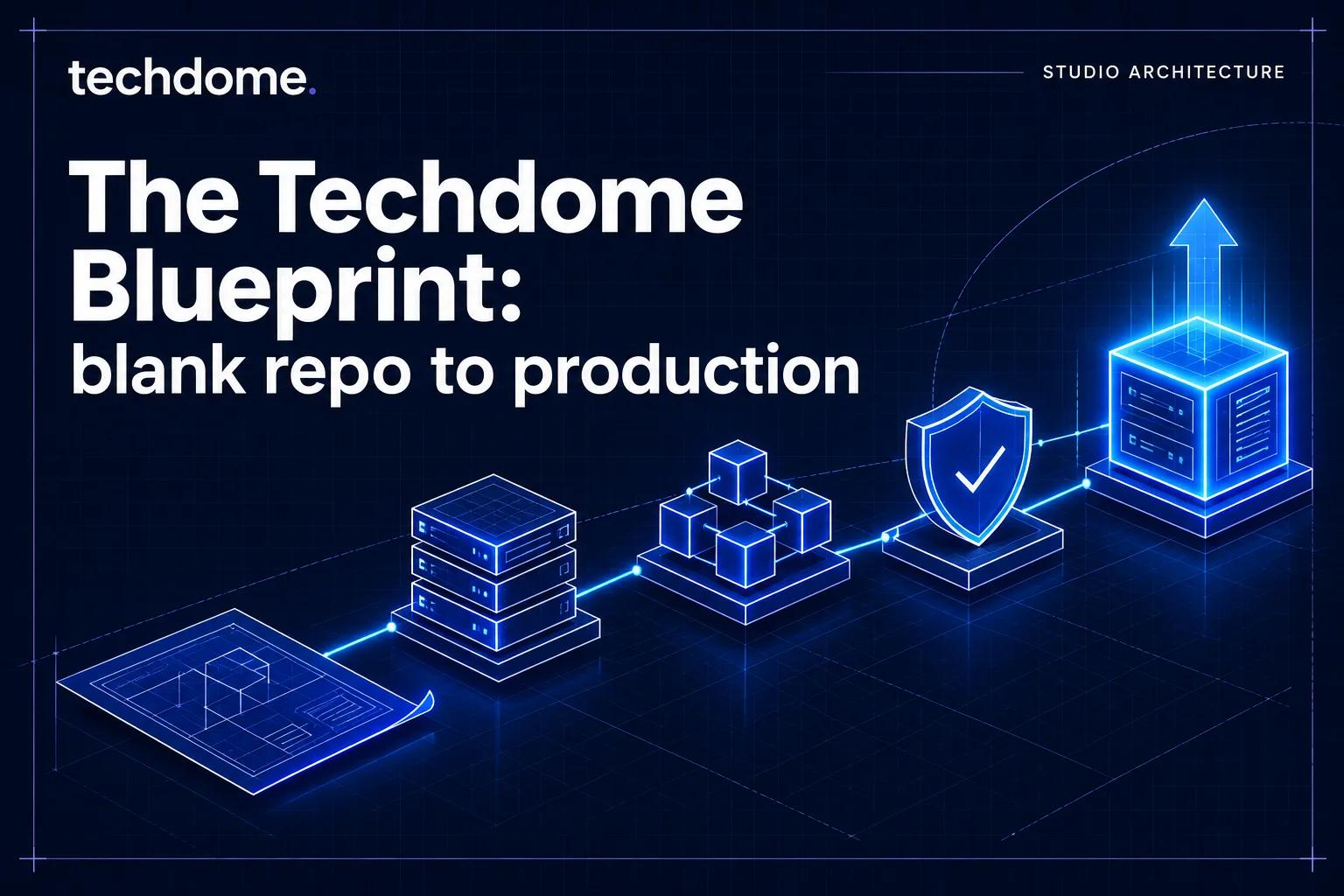
Most software projects slip for one reason: the decisions that shape the code get made late, and then made twice. The Techdome Blueprint is how we avoid that. It is a five-step method, run over about eight weeks for an enterprise-grade SaaS product, where the deliverable of each step is fixed on Day 0.
It comes from six years of continuous shipping since 2020. That includes our own products, Sparrow, JustInterview.ai and Aether Voice, and builds for client companies. It is the method behind our venture studio work on the studio page.
The five steps
- 01De-riskarchitecture, schema, risk matrix
- 02Foundationbackend API, cloud, auth
- 03Integrationfeature-complete staging app
- 04Security and QApen-test review, accessibility, load
- 05Launchproduction, CI/CD, handover
| Step | When | What is delivered |
|---|---|---|
| 1. De-risk and architecture | Week 1 | System architecture, data schema and a risk matrix |
| 2. Foundation and core engine | Weeks 2 to 3 | A working backend API and cloud infrastructure |
| 3. Full-stack integration | Weeks 4 to 6 | A feature-complete staging application |
| 4. Security, QA and compliance | Week 7 | Pen-test review, WCAG 2.2 AA audit and load tests |
| 5. Production launch and handover | Week 8 and after | A live production URL, CI/CD pipelines and telemetry |
Step 1: de-risk and architecture
Before feature work, we audit technical feasibility and lock the compliance requirements that will shape the design, such as HIPAA or SOC 2. We design the relational data model and build interactive wireframes, so the first week ends with a schema and a list of the risks that could still sink the project.
Step 2: foundation and core engine
We provision the cloud infrastructure, set up zero-trust authentication with OIDC or SAML, and build the core business logic and the adapters for third-party APIs. By the end of this step the backend works, even if nothing is pretty yet.
Step 3: full-stack integration
The frontend is connected to the automated backend workflows, payment processing and internal operational dashboards. The result is a complete staging application that real users can test.
Step 4: security, QA and compliance
A full week is set aside for automated testing, accessibility auditing, vulnerability scanning and end-to-end scenarios under high concurrency, with a pen-test review, a WCAG 2.2 AA audit and load tests as the deliverable.
Step 5: production launch and handover
DNS cutover, real-time telemetry, training for your staff, and a structured handover to an ongoing growth pod or to your own team.
What it costs and what you own
We sell the Blueprint in two shapes. Fixed-scope sprints run two to four weeks, start from $8,000, and have a locked deliverable and duration. Dedicated engineering pods run on a monthly retainer. On milestone completion, you receive 100% of the IP and the repositories.
A dedicated engineering pod is a lead architect, senior full-stack engineers and a QA lead. They join your sprint cadence and Slack in about two weeks, and there is a 14-day replacement guarantee if an engineer is not the right fit. Current pricing is on the pricing page.
How recent builds ran
Eight weeks is the Blueprint timeline for a SaaS MVP. Real engagements come in different sizes, so here are four, with the lengths as recorded in the case studies:
- A US conversational AI venture went from a blank repository to a live GraphRAG platform in two to three weeks, with three senior AI and data engineers on a three-week sprint. Read the case study.
- A multi-vendor telehealth care ecosystem moved five separate logins to one single sign-on, in a four-week initial sprint with five engineers. The deal-to-kickoff time was about two and a half weeks. See the case study.
- An executive-health clinic group went from proposal to kickoff in eight days, then ran an eight-week sprint with six engineers. Phases 1 and 2 were signed off in August 2026. See the case study.
- A US and UK telehealth platform started with a 33-person pod for six months and now runs 38 clinic tenants. See the case study.
For founders: the same team, behind the cheque
If you are raising at pre-seed or seed and want the engineering team that runs this method alongside you, that is what Techdome Ventures is for. You can apply here. You do not have to use our engineers to take part.
Related reading
- Engineering HIPAA-ready telehealth platforms: the architecture decisions we make in Step 1.
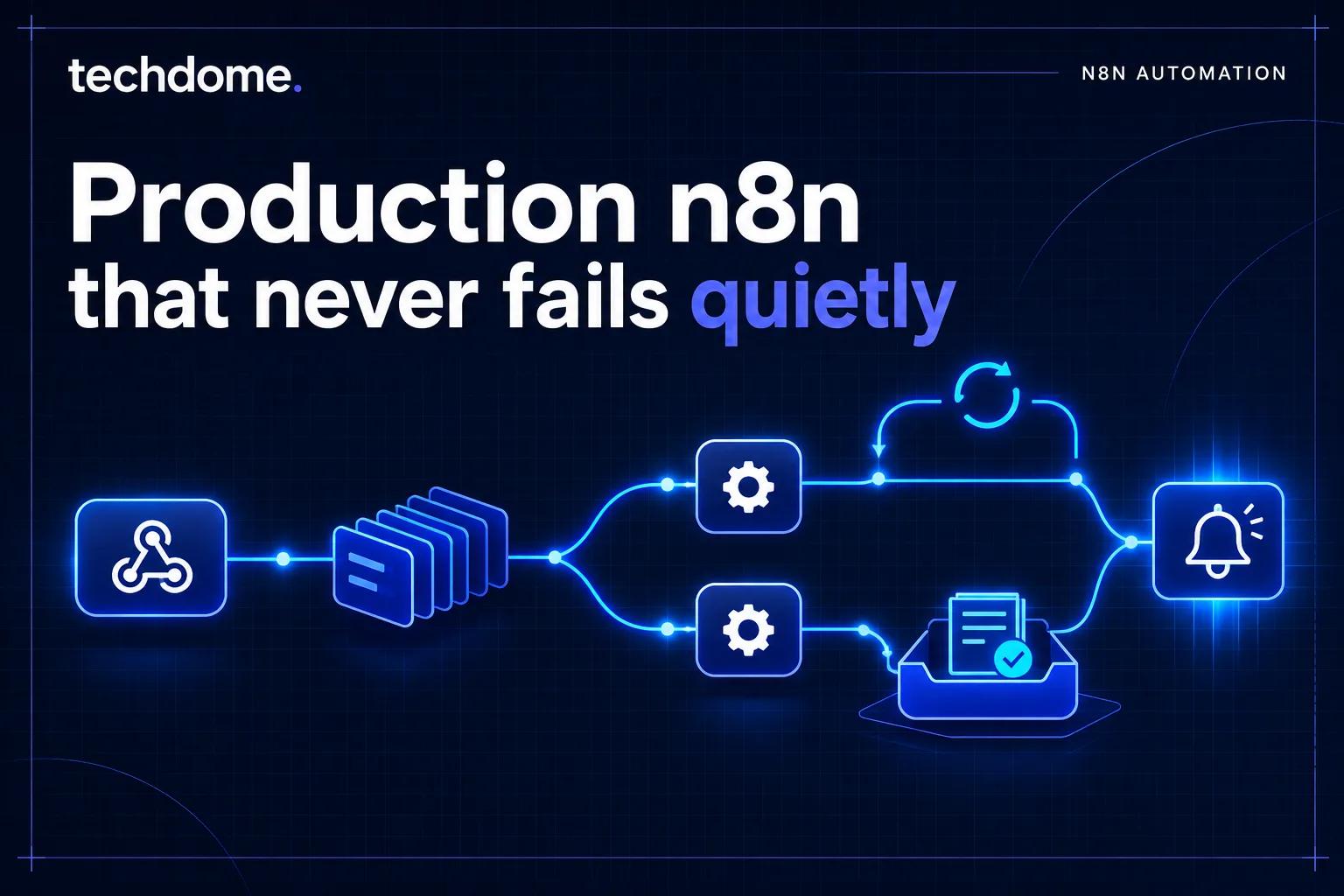
- Production n8n: patterns that keep automation from failing quietly: the workflow side of Steps 2 and 3.
- Building AI agents that hold up in production: what we learned from voice, interviews and GraphRAG.
- Making a Next.js site fast: the performance work that belongs in Step 4.
- More on this topic: MVPs and venture studio.
Takeaways
- The Blueprint has five steps, and each one has a deliverable that is agreed before the work starts.
- Hard decisions go first (schema, tenancy, compliance), and security and QA get their own week.
- Fixed-scope sprints start from $8,000 and run two to four weeks. Larger work runs on a dedicated pod with a monthly retainer.
- You own 100% of the code and the repositories on milestone completion.
Have a project like this? Talk to our engineers.