Techdome
All Insights/Healthcare AI

Telehealth compliance checklist for the US and UK

An engineering checklist for a telehealth platform serving US and UK patients: contracts, access and audit, clinic isolation, licensing by jurisdiction, prescribing, signatures, payments and incidents.

Techdome Engineering
Techdome EngineeringEngineering Team
Oct 28, 20264 min read
Verified Architecture

A telehealth platform that treats US and UK patients needs contracts (a BAA in the US, a data processing agreement in the UK), access control and an audit log, isolation between clinics, licensing checks by jurisdiction, standard messages for prescriptions, and a plan for breaches and patient requests. Build them into the architecture on day one. This is an engineering checklist, not legal advice: have counsel confirm what applies to you.

1. Contracts first

  • BAA with every vendor that touches patient data. In the US, HIPAA requires a business associate agreement with each vendor that handles protected health information for you: hosting, email, messaging, payments, support tools.
  • A data processing agreement for UK patients. UK GDPR requires a written contract with each processor. Sign it before data flows, not after.
  • A list of subprocessors. You need to know every service that sees patient data, or you cannot sign the two items above honestly.

2. Access, encryption and the audit log

  • Role-based access. A front-desk user, a nurse, a physician and a network administrator should each see only what their job needs.
  • Encryption in transit and at rest. Treat it as a default, not a feature.
  • An append-only audit log. Every read, edit and signature is recorded with who, what and when, and nobody can edit the log. If you cannot show who opened a record, you cannot answer an audit or a patient.

3. One clinic cannot see another

In a platform that serves many clinics, isolation is a compliance control, not a nicety. Isolate each clinic's data in the database, enforce it in code, and test it automatically: a user in one clinic must never be able to read another clinic's patients. Our own build uses a multi-tenant PostgreSQL schema with complete tenant data isolation and role-based access control.

4. Licensing by jurisdiction

  • US: a prescriber must hold an active licence in the state where the patient is located. Telehealth rules vary by state, so the match belongs in code, against live registries, and not in a spreadsheet.
  • UK: a prescriber must be registered with the GMC, and pharmacies with the GPhC. Providers in England are also regulated by the CQC.
  • Local rules for asynchronous care differ. Check them for each jurisdiction you serve.

5. Prescriptions and pharmacies

  • Use standard messages. In the US that means NCPDP SCRIPT for electronic prescriptions.
  • Choose the pharmacy on inventory, licensing and proximity, and keep a record of which one received each order.
  • For temperature-sensitive medicines, monitor the shipment through transit and alert before a limit is breached, not after.

6. Signatures and records

  • Provider sign-off should be a real cryptographic signature with a timestamp. Our platform uses one that follows 21 CFR Part 11.
  • Use a standard format for clinical data exchange. FHIR R4 is the usual choice.

7. Payments and accessibility

  • If patients pay on your platform, use a payment provider that tokenises card data, and keep card numbers out of your own database (PCI-DSS).
  • Patient-facing screens should meet WCAG 2.2 AA.

8. When something goes wrong

  • Breaches. HIPAA requires notifying affected individuals without unreasonable delay and within 60 days. UK GDPR requires reporting a notifiable breach to the ICO within 72 hours. Write the runbook before you need it.
  • Patient requests. UK patients can ask for access to their data and for it to be erased. Build the export and delete paths early.
  • Outages at partners. Use queues and retries, so a slow pharmacy or payment provider delays work and does not lose it.

A one-page version

AreaDone when
ContractsBAA and DPA signed with every vendor and processor
AccessRoles defined, encryption on, audit log append-only
IsolationAutomated test proves clinic A cannot read clinic B
LicensingPrescriber matched to patient jurisdiction in code
PrescribingStandard messages, pharmacy chosen by rule, cold chain watched
SignaturesCryptographic sign-off, FHIR R4 records
PaymentsCard data tokenised, screens at WCAG 2.2 AA
IncidentsBreach runbook and patient-request paths written

How we apply it

Our US and UK GLP-1 platform runs 38 clinic tenants (10 operating at scale) and 12,400+ patients, built by a dedicated pod of 33 engineers, architects and QA, with HIPAA and UK GDPR in the architecture from day zero. Read the case study, the overview of telehealth software development, or the guide to how to build a GLP-1 telehealth platform.


FAQ

Questions readers ask

What does a telehealth platform need to be HIPAA compliant?

In engineering terms: a BAA with every vendor that handles patient data, role-based access, encryption, an append-only audit log, and isolation between clinics. Have counsel confirm what applies to your service.

What changes when UK patients are involved?

UK GDPR adds a written data processing agreement with each processor, patient rights such as access and erasure, and a 72-hour window to report a notifiable breach to the ICO. Prescribers must be GMC registered and pharmacies GPhC registered.

How long do we have to report a breach?

Under HIPAA, affected individuals must be told without unreasonable delay and within 60 days. Under UK GDPR, a notifiable breach goes to the ICO within 72 hours. Write the runbook before you need it.

Why is tenant isolation a compliance matter?

In a platform with many clinics, one clinic reading another’s patients is a data breach. Isolate data in the database, enforce it in code, and test it automatically.

Is this legal advice?

No. It is an engineering checklist from a team that has built a platform for US and UK clinics. Your lawyer decides what applies to you.

Continue reading

More foundry teardowns

View all
Isometric illustration of one platform split into separate clinic compartments, with a shield, an access gate and an audit log
Healthcare AIAugust 2026·8 min read

Engineering HIPAA-ready telehealth platforms: the decisions we make first

How tenant isolation, access control, audit logging, identity and vendor agreements shape a HIPAA-ready telehealth system, with what each looked like on three clinical platforms we built.

Rahul Joshi
Rahul JoshiChief Executive Officer
+
+
+
+
Healthcare AIOct 28, 2026·3 min read

How to build a GLP-1 telehealth platform

A builder's guide to a GLP-1 telehealth platform: compliance, multi-tenant clinics, eligibility checks, licensing by jurisdiction, chart review, pharmacy routing, cold chain and billing.

Techdome Engineering
Techdome EngineeringEngineering Team
+
+
+
+
Healthcare AIOct 28, 2026·2 min read

Telehealth metrics and KPIs: the numbers that matter

The 15 telehealth metrics an operator should track, from intake completion to time to physician decision and cold-chain excursions, with real figures from a US and UK GLP-1 platform.

Techdome Engineering
Techdome EngineeringEngineering Team
+
+
+
+
Healthcare AIOct 28, 2026·2 min read

Asynchronous vs synchronous telehealth: which to build first

Asynchronous telehealth means a clinician reviews a prepared case; synchronous means a live visit. How they differ, what each changes in the build, and why most platforms end up with both.

Techdome Engineering
Techdome EngineeringEngineering Team
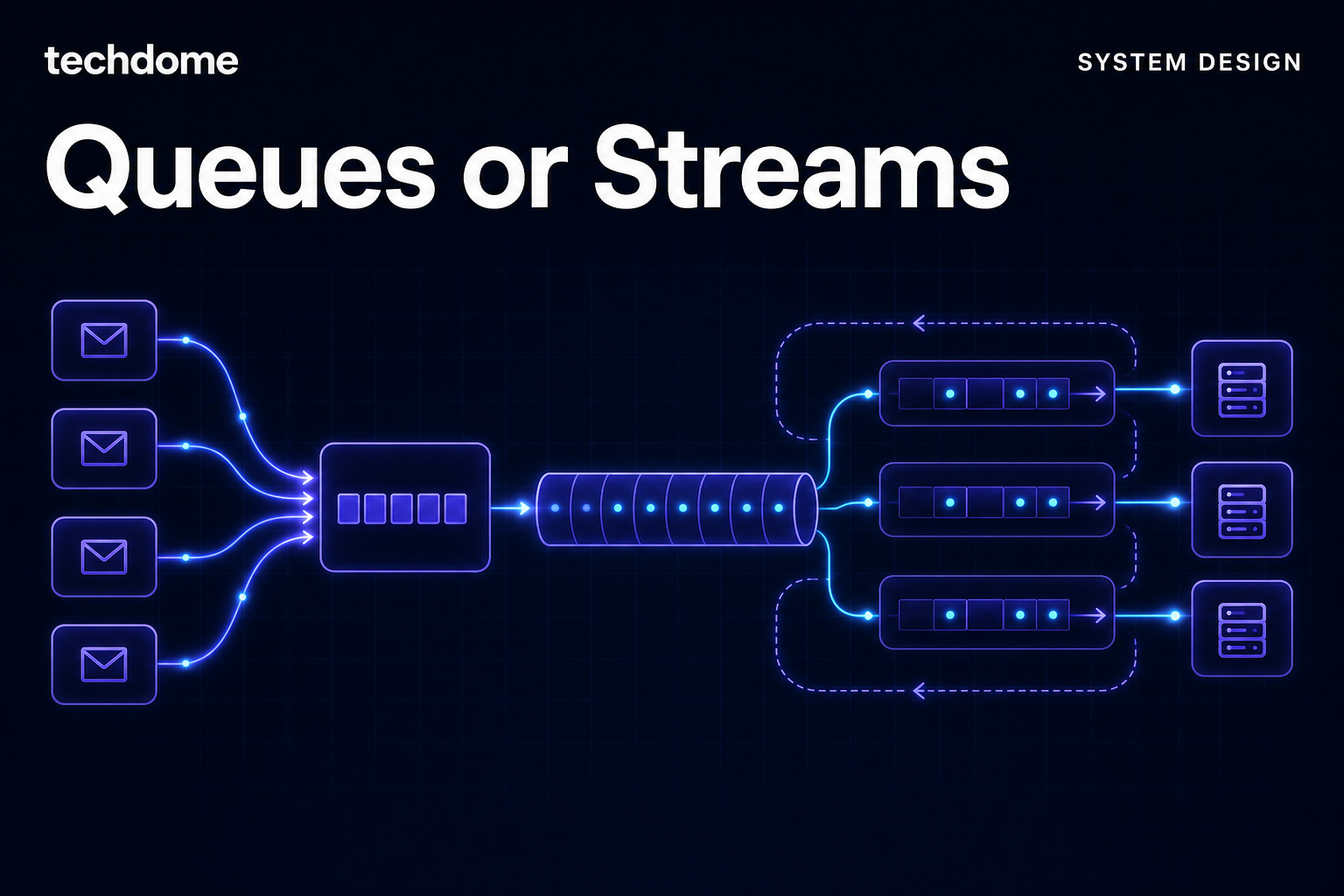
A technical illustration comparing queued task delivery with retained event streaming.
System DesignOct 26, 2026·3 min read

Message queues vs event streams: SQS, RabbitMQ, Kafka

Use SQS or RabbitMQ for work distribution; use Kafka when you need retained event logs, replay, fan-out, and per-key ordering.

Techdome Engineering
Techdome EngineeringEngineering Team
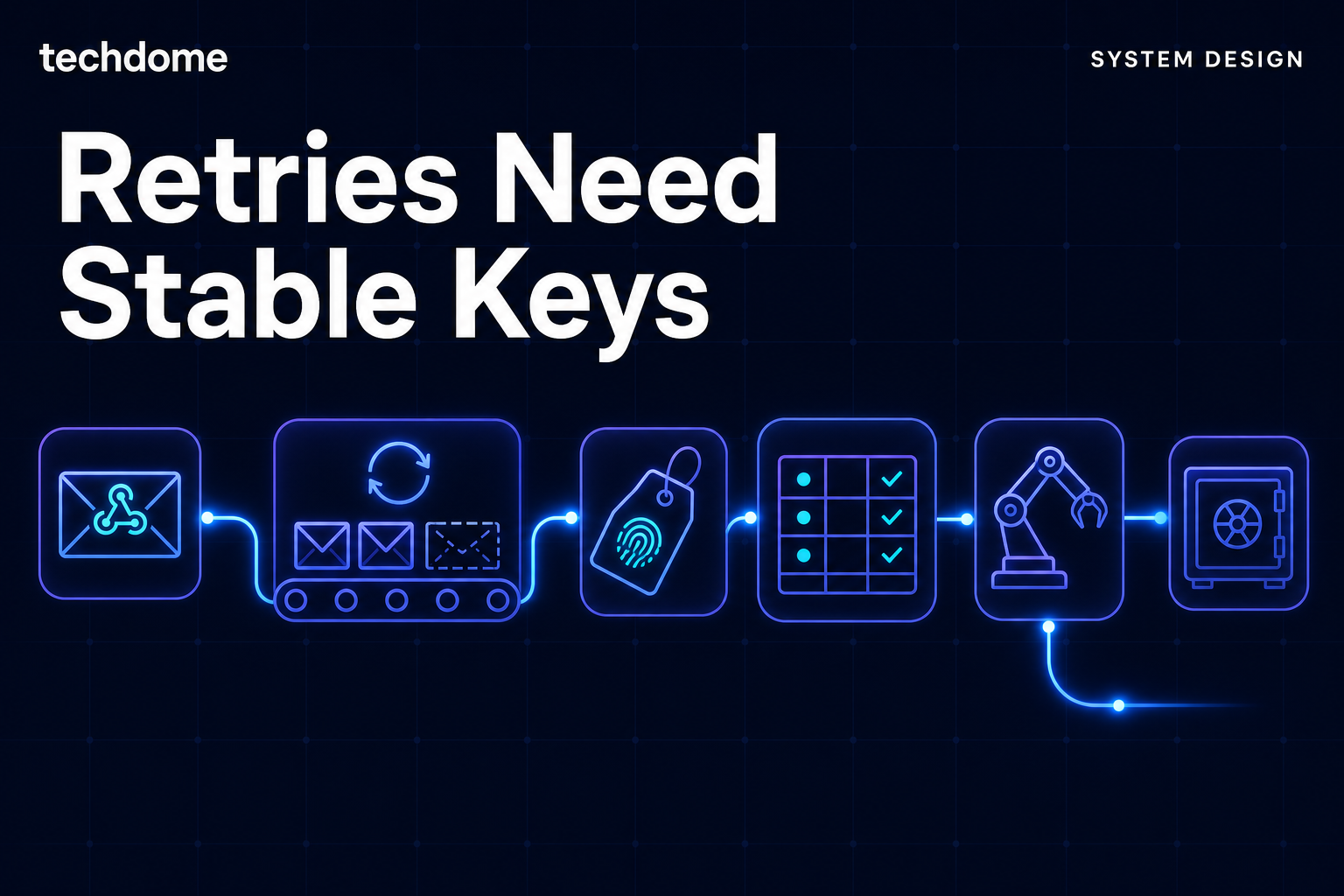
Illustration of webhook retry flow using a stable idempotency key, de-duplication store, and dead-letter queue.
System DesignOct 26, 2026·3 min read

Webhook retries and idempotency keys, together

Webhook retries need stable idempotency keys so repeated deliveries are safe, deduplicated, observable, and recoverable through DLQs.

Techdome Engineering
Techdome EngineeringEngineering Team
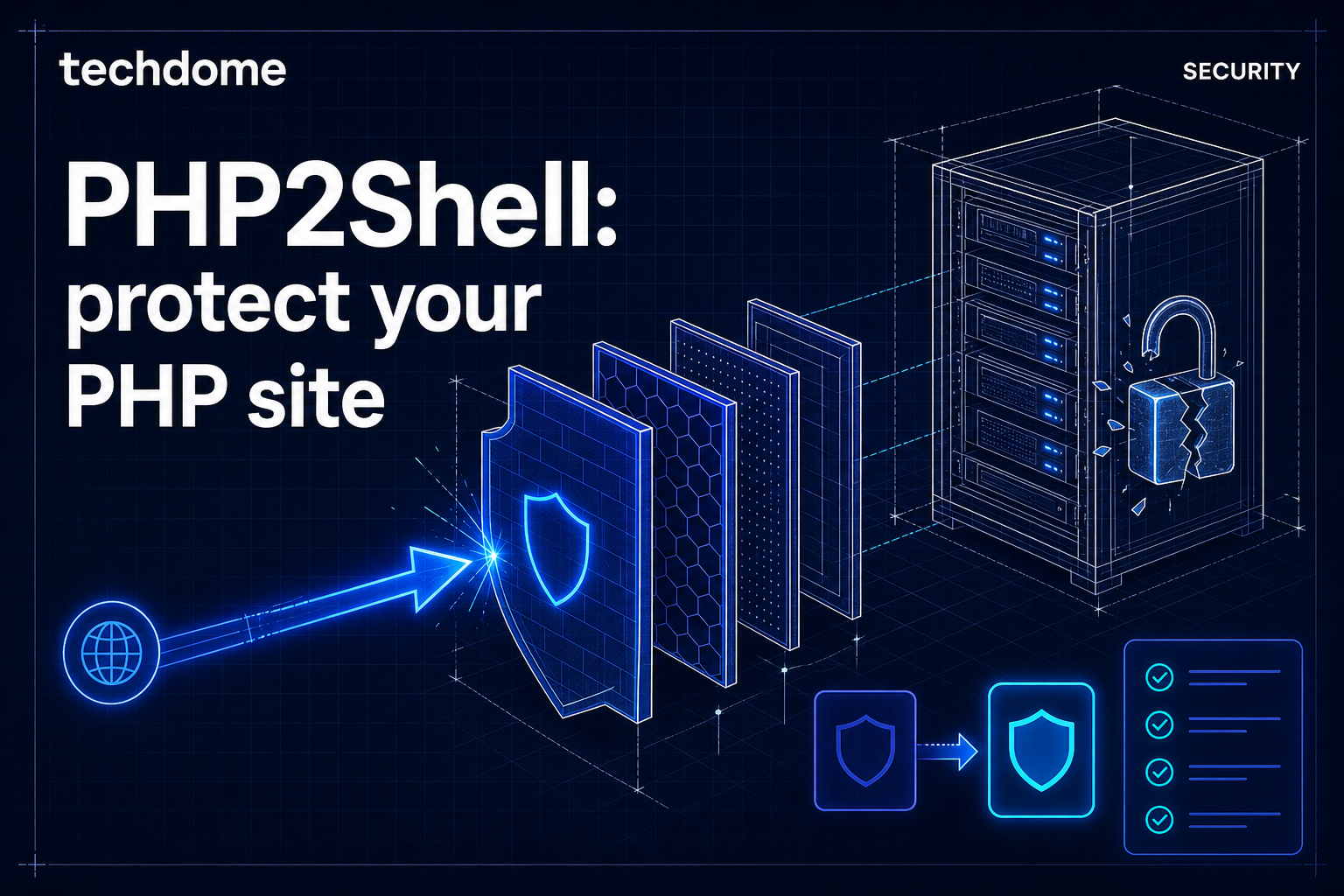
Blueprint-style illustration of a server rack behind a layered firewall shield, with a PHP version badge being upgraded
Engineering PracticeOct 22, 2026·6 min read

PHP2Shell: how to check and protect your PHP site

PHP2Shell (CVE-2026-109618 and CVE-2026-109619): how to check your PHP version, patch it or shield it with a WAF, with two real cases.

Techdome Engineering
Techdome EngineeringEngineering Team
Computer screen filled with code
Engineering Practice8 min read

API testing explained: types, what to automate, and tools

API testing checks an interface directly, below the UI. Learn the five main types, how mocking and test data fit in, and which tests to automate first.

Techdome Engineering
Techdome EngineeringEngineering Team
Computer screen with data
n8n Automation7 min read

"Automating mortgage back-office work with n8n"

Mortgage back offices drown in documents. A staged n8n workflow can handle intake, classification, extraction and validation, and route exceptions to people with a full audit trail.

Techdome Engineering
Techdome EngineeringEngineering Team
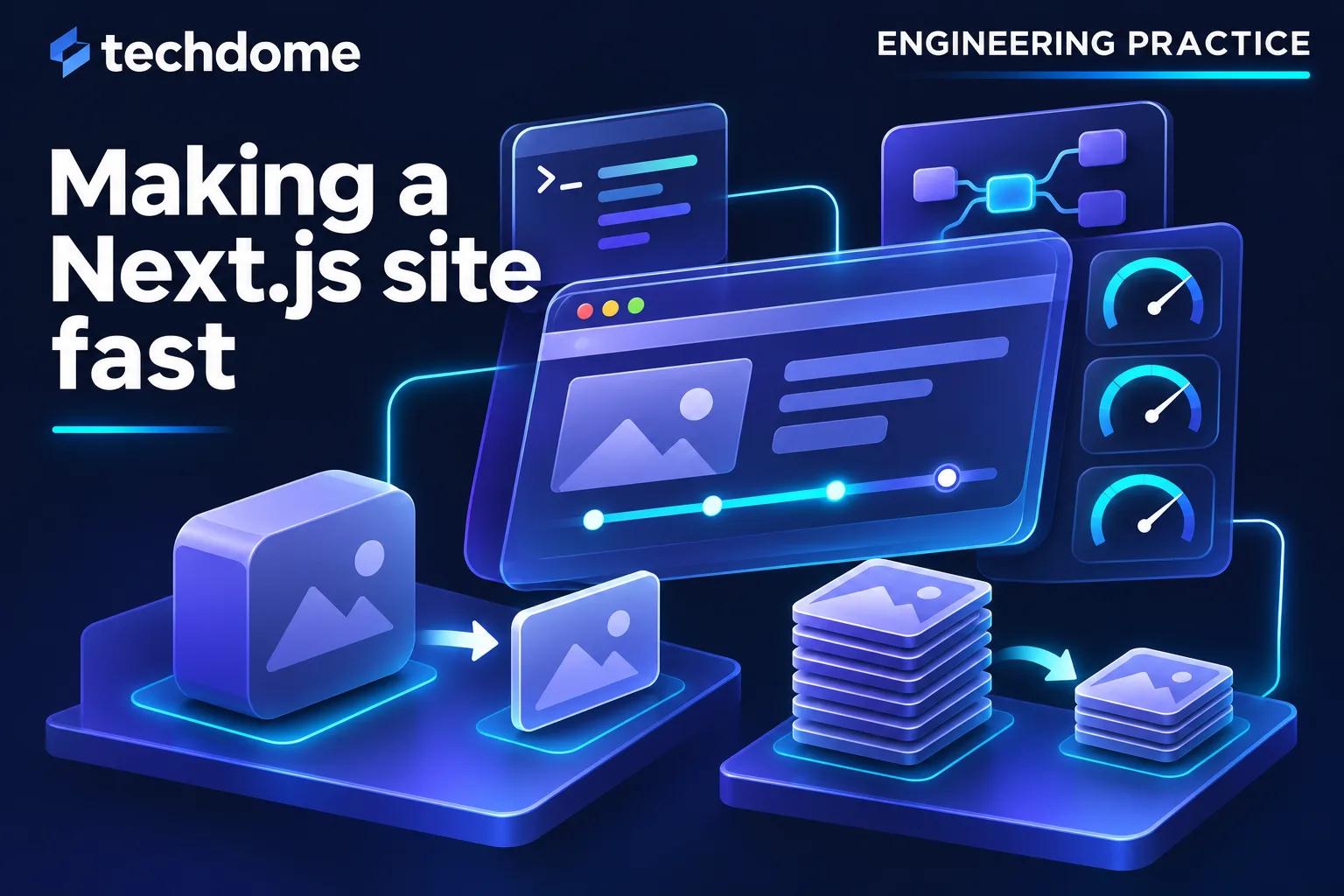
Interface illustration of a browser window with three gauge dials, a heavy block swapped for a light placeholder, and images compressed
Engineering PracticeSeptember 2026·6 min read

Making a Next.js site fast: the fixes that moved Core Web Vitals on techdome.io

Hero images that wait for JavaScript, an embedded scheduler that blocked the page, oversized images and bloated page data: the real fixes behind our site's performance work, and a checklist for yours.

Rahul Joshi
Rahul JoshiChief Executive Officer
3D illustration of an AI agent connected to calendar, database and phone tools, with a sound wave and a small knowledge graph
Studio ArchitectureSeptember 2026·7 min read

Building AI agents that hold up in production: what we learned from voice, interviews and GraphRAG

Narrow jobs, grounded answers, deterministic scoring, a latency budget, full logs and a human handoff: the patterns behind our voice agents, AI interviewer and GraphRAG platform.

Rahul Joshi
Rahul JoshiChief Executive Officer
Pipeline illustration of an automation workflow with a queue feeding two workers, a retry loop, an alert bell and a review tray
n8n AutomationAugust 2026·7 min read

Production n8n: the patterns that keep automation from failing quietly

Idempotent triggers, retries with limits, failure alerts, human review and workflows kept in Git: the patterns we use to run n8n automation in production, with the builds they come from.

Rahul Joshi
Rahul JoshiChief Executive Officer
Blueprint-style illustration of five phases from a drawing board to a launched product, rising along a path
Studio ArchitectureAugust 2026·7 min read

The Techdome Blueprint: how we take a product from a blank repo to production in eight weeks

The five steps of our Blueprint, what each one delivers, how fixed-scope sprints and engineering pods are priced, and how recent builds ran from kickoff to production.

Rahul Joshi
Rahul JoshiChief Executive Officer