GPT-6.2 Astra vs Gemini 4 Hydrogen vs Anthropic 5.2
A practical guide to choosing GPT-6.2 Astra, Gemini 4 Hydrogen or Anthropic 5.2 for product and research AI workloads.

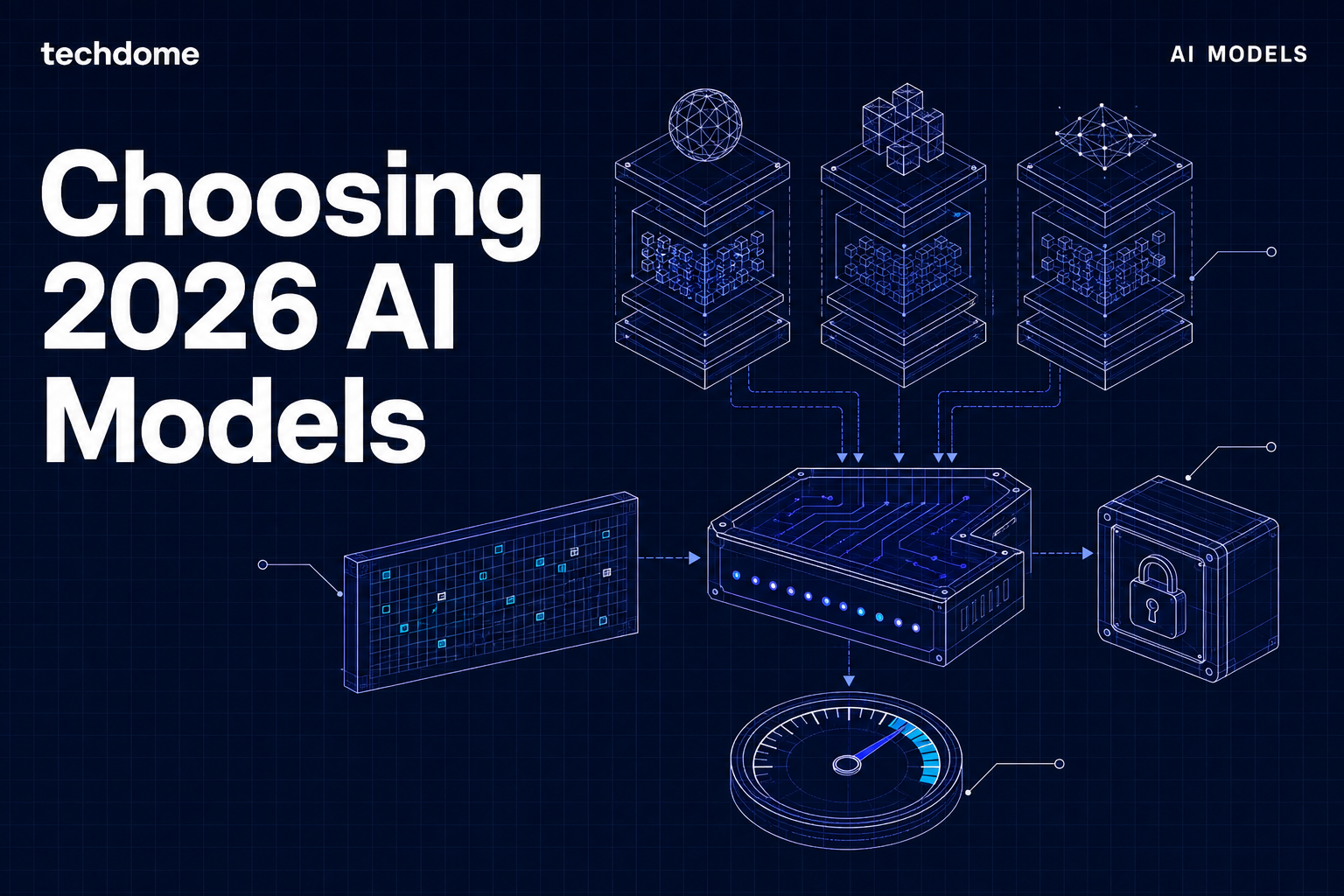
GPT-6.2 Astra vs Gemini 4 Hydrogen vs Anthropic 5.2 is not a simple model ranking. Astra is the capability-first generalist, Hydrogen is the fast integrated Google-native option, and Anthropic 5.2 is the safety-gated enterprise family for sensitive agentic work.
For engineering leads, the decision should start with the product constraint: latency, context length, safety tolerance, platform coupling and unit economics. A research team can tolerate slower, more expensive exploratory calls; a production feature needs stable routing, cost controls, fallback behaviour and auditability from day one.
GPT-6.2 Astra vs Gemini 4 Hydrogen vs Anthropic 5.2: the short version
A practical split is: Pick GPT-6.2 Astra when the hardest part of the feature is reasoning quality: planning, synthesis, code generation, tool selection or complex multi-step language work. OpenAI positions Astra as the capability-focused model, with Sol as the lower-cost and higher-throughput sibling for everyday tasks.
Pick Gemini 4 Hydrogen when your product already lives near Google services or needs low end-to-end latency across multimodal and agent workflows. Hydrogen is positioned around Google product integration, managed agent tooling, caching and continuation patterns for long outputs.
Pick Anthropic Claude Fable/Mythos 5.2 when safety posture, gated variants and enterprise risk controls matter more than maximizing model flexibility. That is the conservative choice for regulated workflows, internal enterprise agents and systems where reviewability is part of the product requirement.
In short:
- Astra handles: hardest reasoning, planning, complex tool use and quality-sensitive generation.
- Hydrogen handles: Google-native workflows, multimodal agents, long outputs and latency-sensitive product embedding.
- Anthropic 5.2 handles: safety-gated enterprise agents, sensitive domains and workflows that need stronger control surfaces.
Capability, context and product fit
All three model families now sit in the very-large-context class. The OpenAI Astra model documentation lists very large context support for Astra family entries, with references to 1M+ contexts for the Astra class. Google documents Hydrogen support up to 1,048,576 tokens combined input and output through Gemini 4 Hydrogen cloud docs, including continuation token patterns. Anthropic’s 5.2 system card describes 1M token context options in the family with explicit large-context configurations.
Do not treat a 1M token window as a reason to dump the whole customer history into the prompt. Large context is useful for research synthesis, codebase analysis, contract review, multimodal evidence packs and long-running agents, but it is still an expensive working set. For production agents, keep retrieval explicit, summarize older state, and keep deterministic rules outside the model. That pattern is close to the guidance in our earlier article on production AI agent orchestration: narrow jobs, grounded answers, deterministic scoring and full logs matter more than raw prompt size.
For product work, match the model to the failure mode. If a bad answer creates user confusion but can be regenerated, Astra or Hydrogen may be the better default depending on quality and latency. If a bad answer creates compliance exposure, customer harm or irreversible side effects, Anthropic 5.2 plus stricter guardrails is easier to justify. If the task is exploratory research, use a high-capability model within budget, but isolate it from production side effects.
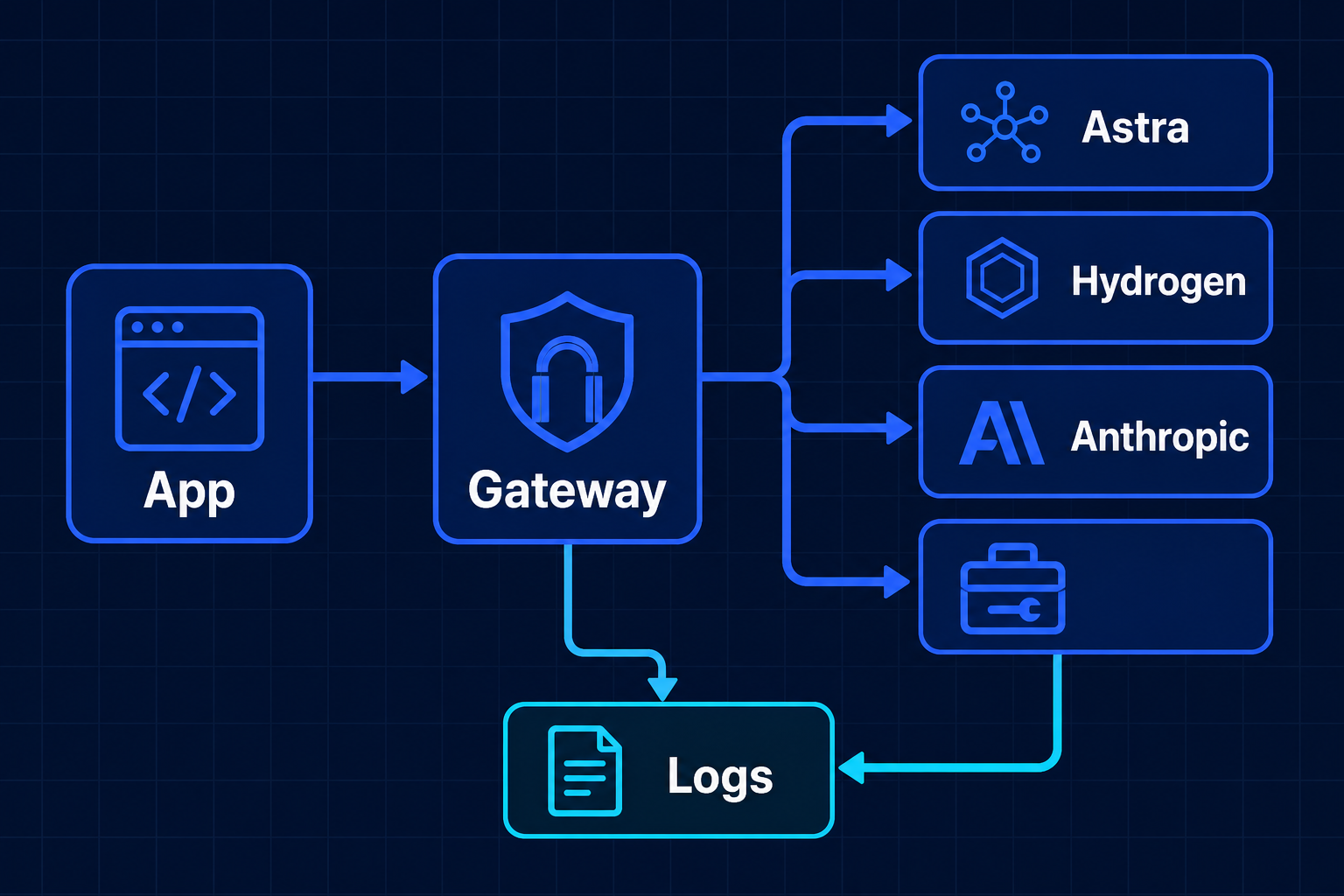
A useful routing shape is a thin model gateway, not direct calls scattered through the codebase. The application sends a task type, risk level and latency budget to the gateway; the gateway chooses Astra, Hydrogen, Anthropic 5.2 or a cheaper sibling model; tools and writes stay behind deterministic APIs.
Cost, latency and platform coupling
The cost story is not only price per million tokens. It is input size, output size, retries, cache hit rate, streaming behaviour, escalation frequency and how often humans need to review the result. OpenAI documents differentiated pricing and latency tiers in its API pricing page, including faster modes and cache-related trade-offs. Google’s Hydrogen announcement cites example pricing of about $1.50 per million input tokens and about $7.50 per million output tokens for the 1M context Hydrogen offering. Anthropic’s separate pricing sheet lists tiers for batch, interactive, cached writes and cache hits.
Latency has the same shape. OpenAI positions Astra for capability and Sol for lower-cost, higher-throughput everyday tasks. Google says Hydrogen is engineered to reduce end-to-end agent latency and reports about a 28% reduction versus prior model families in its own benchmark context. Anthropic emphasizes operational gating and safety margins, which can be the right trade when review and control are more important than raw response speed.
Platform coupling is the hidden cost. Hydrogen is attractive if your product depends heavily on Google Workspace, Gmail, Drive, Calendar, Search or Google Cloud identity controls. It is less attractive if your architecture needs cloud portability or strict vendor abstraction. OpenAI has a broad ecosystem and is also available through Microsoft Foundry according to the Azure Foundry announcement. Anthropic’s managed cloud options and gated variants are better aligned with teams that want a tighter safety envelope.
For a production system, use these model families as tiers, not as a single hard dependency:
- Cheap and fast tier: classification, rewriting, extraction drafts, intent routing and low-risk support.
- High-capability tier: complex planning, code assistance, synthesis and final answer generation.
- Safety-first tier: regulated or high-risk outputs, second-pass review and policy-sensitive workflows.
- Background tier: long research jobs, summarization, evaluations and batch processing.
Safety controls and governance
Safety controls should be treated as architecture, not vendor decoration. OpenAI describes safety layers, policy controls, enterprise terms and cache or TTL options around the Astra/Sol family. Google’s advantage is integration with Google Cloud IAM, Workspace-level admin controls and product-level guardrails. Anthropic’s 5.2 documentation is the most explicit about gated variants, risk documentation and constrained tool-use patterns.
For regulated or sensitive applications, the model choice is only one layer. You still need tenant isolation, access control, audit logging, data minimization, vendor review and human escalation. The same reasoning applies in healthcare systems; our article on HIPAA-ready AI architecture covers the early decisions around isolation, identity, audit logging and vendor agreements.
A simple policy works well: classify every model call by risk before it reaches the provider. Low-risk calls can use faster and cheaper tiers. Medium-risk calls require retrieval grounding and structured output validation. High-risk calls require explicit citations, review queues, second-model checks or human approval before action. The important part is that this policy lives outside the prompt, where it can be tested and audited.
For product teams, safety evaluation should be replayable. Keep prompt versions, tool schemas, model settings, retrieval snapshots and output decisions. Use test suites for representative requests and failure cases. A local API testing and mock-server workflow, such as Sparrow, is useful for validating provider integrations, fallback logic and error handling before a model reaches staging.
Integration patterns that keep options open
A safer migration path is to design a provider-neutral interface. Do not let product code know whether it is calling Astra, Hydrogen or Anthropic 5.2. Product code should submit a task contract: purpose, input references, allowed tools, maximum output shape, latency budget and risk level. The gateway should translate that contract into provider-specific calls.
Use function calling and tool APIs for side effects. The model can decide that a refund should be investigated or that an appointment slot should be offered, but the actual write must happen through deterministic backend services. For voice and real-time systems, latency budgets are even tighter; products like Aether Voice sit in that class, where streaming, routing and fallback behaviour matter as much as the underlying model.
A practical migration pattern looks like this:
- Start with one primary provider and one fallback provider.
- Keep prompts, schemas and tool definitions versioned.
- Stream partial responses for user-facing flows where useful.
- Queue long research or summarization jobs to background workers.
- Cache stable context and reusable system instructions.
- Escalate only hard tasks to the most expensive model tier.
For RAG and GraphRAG systems, do not rely on context length alone. Keep retrieval quality measurable: recall, citation accuracy, stale-document handling and answer drift. Large context helps when the relevant evidence is broad, but retrieval still decides what the model attends to first.
Trade-offs and when not to use each
Do not use GPT-6.2 Astra for every request just because it is positioned as the capability-first generalist. It is better reserved for requests where reasoning quality changes the product outcome: coding help, complex planning, high-value drafting, synthesis and multi-tool agents. If most requests are templated, extractive or low risk, route them to Sol, a smaller model or a background flow.
Do not use Gemini 4 Hydrogen purely to chase latency if you are not using the surrounding Google ecosystem or long-output patterns. Its strongest case is integrated product work across Google services, multimodal agent pipelines and large-context workflows where the documented 1M-context pricing fits your token profile. If portability is a hard requirement, add a gateway before adopting Hydrogen-specific APIs deeply.
Do not use Anthropic 5.2 as a universal default if your workload is price-sensitive, high-volume and low-risk. Its gated variants and safety posture are valuable when the domain needs them, but they may add operational constraints that are unnecessary for simple generation or internal productivity tasks. Use it where safety, reviewability and conservative behaviour are product requirements.
Also avoid all three high-capability tiers when the problem is deterministic. If a rules engine, SQL query, search index, workflow engine or typed API can solve the task, use that first. The model should handle ambiguity and language; your systems should handle authority, state and irreversible actions.
How this looks in practice
A relevant pattern appears in the case study for a US conversational AI venture. The build was a production-grade multimodal conversational AI engine using WebRTC with Opus, Deepgram Nova-2, a LangChain supervisor, self-hosted n8n, Apache AGE, pgvector, PostgreSQL and Cartesia Sonic. The results are listed as Commercial Sprint: $10K; Delivery Time: 2–3 Wks; Architecture: GraphRAG.
The important lesson for this comparison is not that one November 2026 model should be hardcoded into every voice or agent system. It is that the architecture separates orchestration, retrieval, memory, speech, transport and model reasoning. That separation makes it easier to route high-risk turns to a safer model, low-latency turns to a faster model and long research turns to a background job.
For engineering leads, this is the pattern to copy: build the control plane first. Once prompts, retrieval, tool calls, logs and fallback paths are explicit, model selection becomes a routing decision instead of a rewrite.
Sources
This guide is based on vendor announcements, model documentation, pricing pages and system cards available in the research notes: OpenAI’s GPT-6.2 Astra/Sol announcement and developer docs, Google’s Gemini 4 Hydrogen announcement and Cloud documentation, the Gemini 4 Hydrogen model card, Anthropic’s Claude Fable/Mythos 5.2 system and pricing PDFs, and Microsoft’s Azure Foundry availability note for GPT-6.2 Astra and Sol.
Vendor claims and prices can change quickly. Re-check the pricing page, model card and contractual data-handling terms before committing a production workload or regulated dataset to any provider.
Takeaways
- Choose Astra when reasoning quality is the main product constraint and you can manage cost with routing, caching and lower-tier fallbacks.
- Choose Hydrogen when latency, multimodal agents and Google-native integration are central to the product architecture.
- Choose Anthropic 5.2 when safety gating, enterprise controls and reviewability are more important than maximum flexibility.
- Keep provider choice behind a model gateway with versioned prompts, tool schemas, logging, tests and fallback paths.
If you are deciding how to route a production AI feature across these models, talk to our engineers.
Further reading
- Building AI agents that hold up in production - Practical patterns for latency budgets, grounded answers, deterministic scoring and human handoff.
- Sparrow - Useful for API prototyping, mock servers and repeatable integration tests around model gateways.
- A US Conversational AI Venture - Shows a production GraphRAG and multimodal agent architecture pattern.
- Engineering HIPAA-ready telehealth platforms - Helpful when model choice intersects with access control, audit logging and vendor agreements.
References
- OpenAI GPT-6.2 Astra and Sol announcement - Supports positioning of Astra and Sol, capability focus and latency tier context.
- OpenAI GPT-6.2 Astra model docs - Supports Astra context window and model documentation claims.
- OpenAI API pricing - Supports pricing tiers, caching and latency/cost trade-off discussion.
- Google Gemini 4 Hydrogen announcement - Supports Hydrogen positioning, benchmark claim and pricing example.
- Google Gemini 4 Hydrogen cloud docs - Supports 1,048,576 token context, continuation token and caching discussion.
- Gemini 4 Hydrogen model card - Supports multimodal context and evaluation context.
- Anthropic Claude Fable/Mythos 5.2 system card - Supports gated variants, safety posture and large-context configuration discussion.
- Anthropic Claude Fable/Mythos 5.2 pricing PDF - Supports pricing tier discussion for Anthropic 5.2.
- Microsoft Azure Foundry GPT-6.2 note - Supports availability through Microsoft Foundry.